TMP Community toolbox
Contact us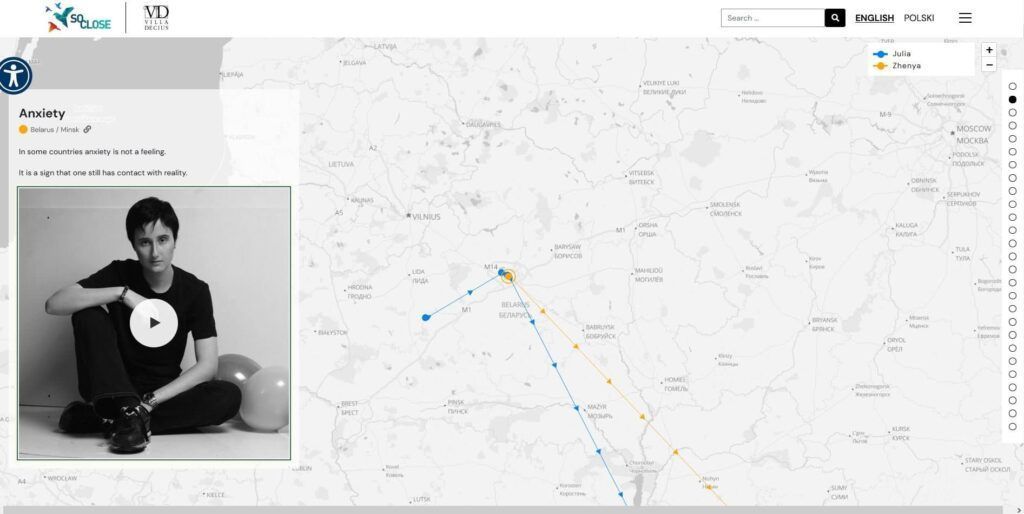
Why choose TMP Community toolbox?
TMP Community toolbox lowers the technological barriers to creating and sharing digital narratives and enables non-expert users to run projects with their own content.
The tools were developed as part of the European project SO-CLOSE (Horizon 2020), led by the Universitat Autònoma de Barcelona. SO-CLOSE set out to bring to light what past and present experiences have in common, through innovative digital tools and collaborative approaches. In this context, the three tools were conceived and developed to help cultural institutions and communities build and publish their digital stories. We designed them together with the historical memory institutions taking part in the project.
Institutions working on social issues that want to encourage content co-creation and promote the participation of users and communities can use the tools to create projects based on journeys, chapters or exhibitions, archive and publish multimedia content, and run crowdsourcing calls.
Key features
Digital storytelling
The main idea behind the tools is that any institution or user community can give its narratives a digital form, choosing the format that suits it best, without investing a lot of resources.
Multimedia
Many types of media can be published, from conventional photos and videos to 360° media and 3D models. Several video playback options are available (self-hosted or YouTube).
Collaborative processes
The three tools are built around the concept of co-creation, so that they can be deployed as part of participatory processes. This is reflected both in the narrative structure on offer (publishing interfaces) and in the story creation environment (authoring system), where different people can collaborate by creating, reviewing or updating content.
Ease of use
No programming skills are needed to use the tools and create digital content. With the support materials and some basic guidance, the same people who write a text or record a video can use them independently.
Main functionalities
Modular structures
Each tool includes a series of display modules offering different types of composition, depending on the format and layout of the content to be published. It can hold many narratives in separate chapters.
Data interoperability
The tools’ content management system is based on international metadata standards (Dublin Core) and allows metadata to be shared with and published to external repositories.
Interactive museography
Projects can be displayed in museum spaces on interactive screens and tablets, serving as narrative exhibition resources.
Accessibility
Projects include a set of accessibility features by default (navigation, adjustable font size, underlining, high contrast) and are designed to meet level AA of the Web Content Accessibility Guidelines (WCAG).
Multilingual
Both the content management system and the public interfaces support multiple languages.